
The Christian’s Guide to Overcoming OCD
Struggling with unwanted intrusive thoughts or repetitive compulsions? This definitive guide offers a compassionate and practical roadmap for Christians seeking healing from Obsessive Compulsive Disorder (OCD). Learn the nuts and bolts of evidence-based treatment, including Cognitive Behavioral Therapy (CBT) and Exposure and Response Prevention (ERP), while growing your faith.
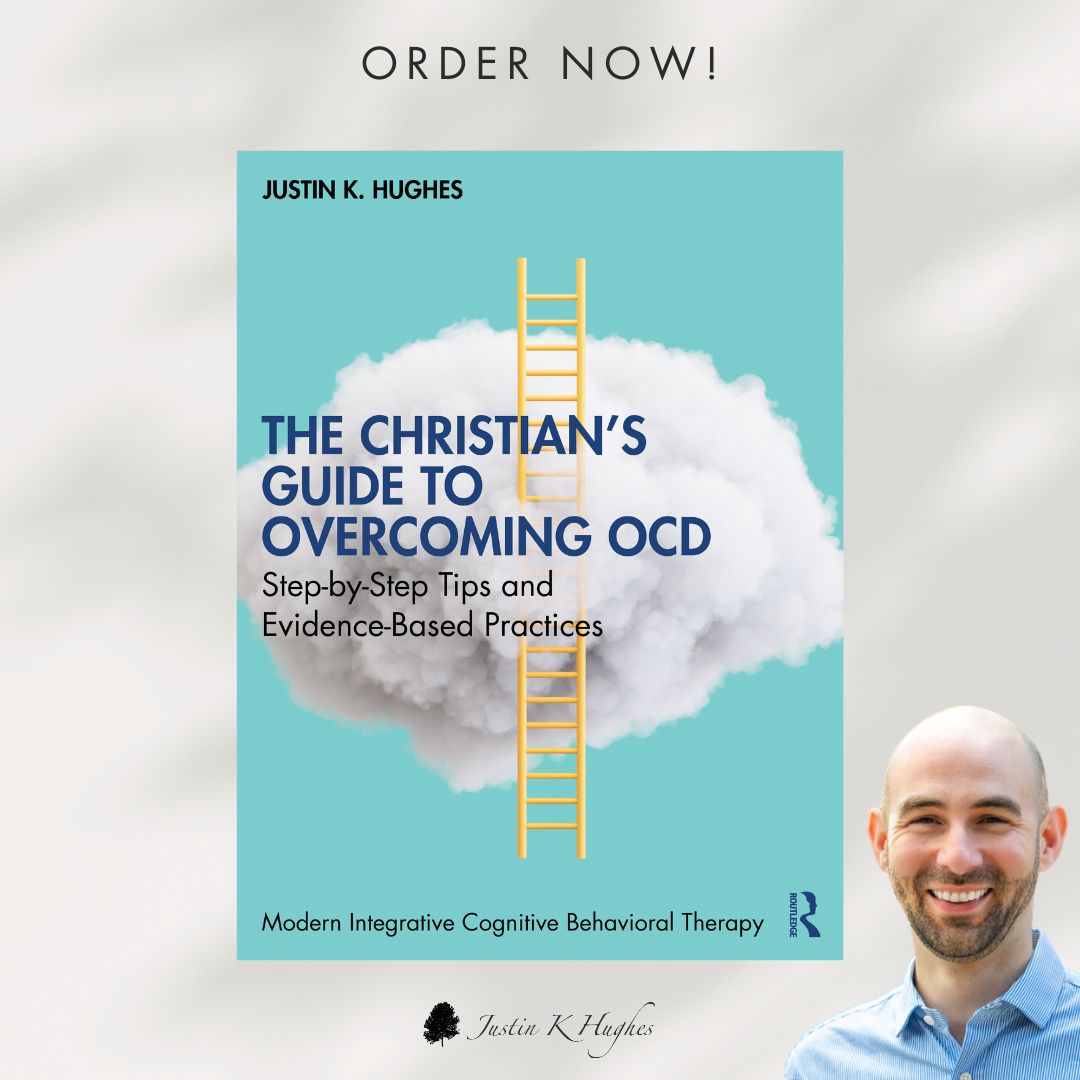

Discover why OCD is a treatable illness, not a lack of faith.
Through a Christ-centered approach, this book helps you understand the OCD cycle and its subtypes, including scrupulosity, where faith concerns become obsessions. With practical exercises and biblical insights, learn to change your relationship to fear, doubt, and uncertainty.
Stop the cycle of shame and isolation. Find hope and lasting recovery by embracing a whole-person approach that addresses the mind, body, and spirit. This book is an essential resource that invites anyone with OCD—or those who love them—to embrace a life of freedom, purpose, and a deeper connection with God.
Get updates about the book along with any future events or promos.
Blessings in Christ,
~Justin
Advance Praise
Over the course of clinical practice and ministry, I’ve seen the damage that can occur when OCD in Christians is misunderstood. Well-meaning believers sometimes offer advice that unintentionally deepens shame and isolation of OCD sufferers. Likewise, therapists unfamiliar with a Christian worldview may, in the course of OCD treatment, ask clients to do things that violate their consciences, leading to spiritual distress and dropout from treatment. But, I’ve also seen the beauty and freedom that emerge when faith and evidence-based treatment work hand in hand. Justin’s book is a bridge. It’s a guide. And it’s a source of comfort for those who feel alone in their struggle.
In The Christian's Guide to Overcoming OCD, Justin Hughes provides a cogent integration of evidence-based strategies and Biblical principles to help believers who struggle with OCD. Romans 8:1 (NKJV) notes that ‘there is therefore now no condemnation to those who walk according to the spirit, not according to the flesh,’ and Justin does a masterful job providing hope for the believer who struggles with OCD by destigmatizing these symptoms that often leave many Christians feeling condemned. If you are a Christian who struggles with symptoms of OCD, this is a must-have treatment guide.
I’ve been waiting a lifetime for a book like The Christian’s Guide to Overcoming OCD. You will be left feeling seen, heard, and empowered.
This is more than a book—it’s a must-have resource for Christian mental health professionals and anyone on an OCD journey! Justin brilliantly weaves clinical insights and an abundance of practical tools with a rich understanding of Scripture. This is one of the best resources I’ve come across for Christians seeking to overcome anxiety with spiritual life that really makes sense—rooted and grounded in truth, freedom, and tangible grace.
This book offers a rare integration of faith and evidence-based practice, giving Christians with OCD both practical tools and spiritual guidance. With clarity and compassion, it lights a path toward freedom, hope, and lasting change in ways that can improve your life.
Justin Hughes has written a thoughtful and compassionate book sure to resonate with any Christian struggling with OCD. His book provides valuable, up-to-date information on this disabling condition, all through the lens of a devout Christian. Facts about OCD and its treatment are punctuated by relevant quotes from scripture, opportunities for reflection and prayer, vignettes from his work with Christian patients, and tips for navigating through misconceptions and barriers commonly experienced by Christians with OCD. I urge any OCD sufferer, perhaps especially those who question the compatibility of medical science and Christianity, to read this book.
Justin K. Hughes’s The Christian’s Guide to Overcoming OCD: Step-by-Step Tips and Evidence-Based Practices is a vital resource for Christian sufferers, their loved ones, clergy, and the clinicians who treat them. Written in a compassionate, hopeful, and conversational tone, the book translates clinical concepts into thoroughly accessible, informative guidance. It is an excellent roadmap for adapting evidence-based practices for a specific population that frequently faces unique barriers to mental health care and therapeutic buy-in.
Justin did an amazing job with his book! I found that it is not only extremely well researched, but also is theologically and biblically honest. It’s refreshing to find a professional resource that does not compromise either of these two vital pillars. If you or someone you love has OCD I highly recommend this book. I know I’m gonna be purchasing it for church leaders and others who do not know how to minister to those with this brutal, but very treatable mental illness. Thank you, Justin! This book is definitely the missing link for the church and mental health! Also, I really appreciate just how much honesty hope and empowerment there is on every single page.
I'm so grateful for this book that helps members of the faithful overcome anxiety and OCD. You can tell the author really understands both the Bible and OCD. The advice is very practical and encouraging. He made it very easy. The title says OCD but I think it would be helpful for all forms of intense anxiety. Just really helpful information in a very safe and affirming format
I have been a friend and colleague of Justin for many years, and I have been so eager for this book to come out! Justin brings such passion and expertise to his work with OCD, and this book skillfully weaves the science of ERP with scripture passages to show how ERP and faith are not exclusive or conflicting. If you are contemplating ERP, this book gives you a lot of practical guidance with a deep respect for your faith and values. It also does a great job of addressing common misconceptions, concerns, and questions to help readers feel more confident in navigating tricky areas that can often come up with scrupulosity OCD. This book includes devotionals and prayer journal prompts that allow and encourage readers to bring their faith into this challenging, exciting work. The reader will sense Justin's compassion, skill, and thoughtfulness as he addresses complex faith questions in the context of OCD treatment and recovery. I would recommend purchasing the paper version (as opposed to the e-book) if you want to complete the writing exercises in the workbook itself. I am so glad that this book is here, and I would highly recommend it to anyone who is looking for a book that honors their faith while also providing practical and science-backed guidance!
I refer Christian clients with OCD to a pretty short list of resources. This one's going on it for sure! The scrupulosity chapter alone is worth it. The fear of unconfessed sin, blasphemous thoughts, not feeling certain about salvation. Justin doesn't dance around any of it. And he's figured out how to explain ERP in a way that doesn't feel like it's asking someone to abandon their faith to get better. That's not easy to do. Faith Question 15, how to tell the difference between conscience and OCD, is the kind of thing I've tried to explain in sessions more times than I can count. He nails it. If you've been told to confess your thoughts to your small group or just pray more and it hasn't helped, this book explains why that makes sense and what to do instead.
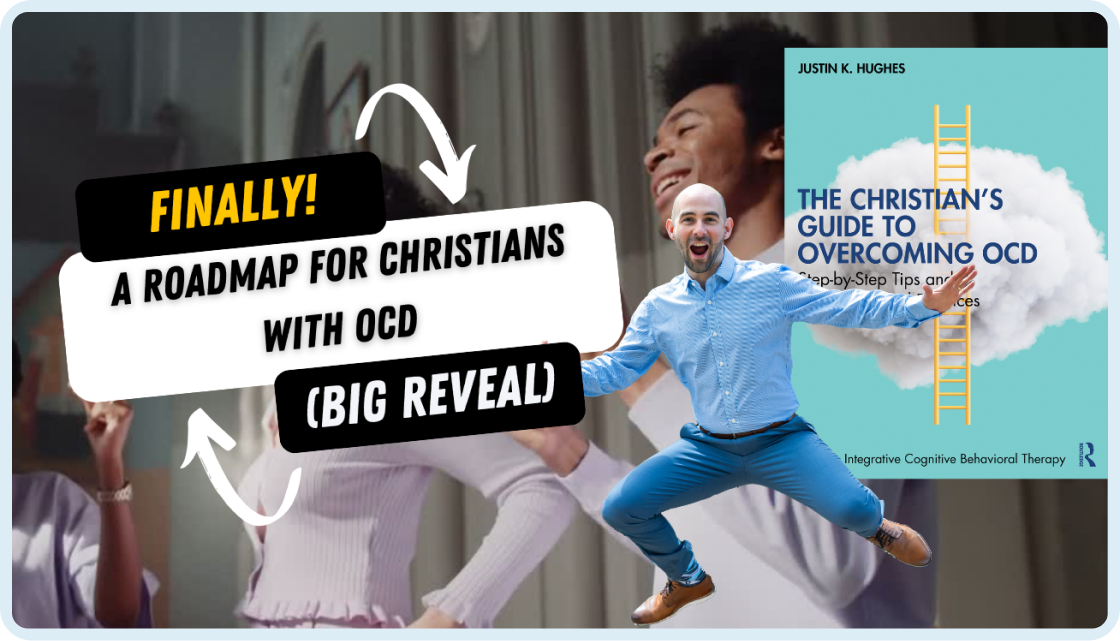
Behind the Scenes
For the last six years, I’ve been trying to “practice what I preach”—but it wasn’t easy. While writing The Christian’s Guide to Overcoming OCD, I faced some of the same “what-ifs” my clients do. What if I misrepresent God? What if I’m not good enough? What if this fails? I want to help bring hope and freedom for those who suffer deeply from fear. I had to face my own first.
Watch the story by clicking on the image (redirects to YouTube).
*Educational materials and self-help is created for informational purposes only, whether images, text, videos, or other formats. Content is not intended as a substitute for professional advice, treatment, advice, or diagnosis. Always seek the advice of your own personal health provider who is qualified to treat you, along with asking them any questions you may have regarding medical or other conditions. Never disregard professional medical advice or delay in seeking it because of something you have viewed through educational or self-help content. Justin K. Hughes, MA, LPC of Dallas Counseling, PLLC participates in the Amazon Services LLC Associates Program. This means that some links on this site will produce a small commission from Amazon.com and affiliated sites.