
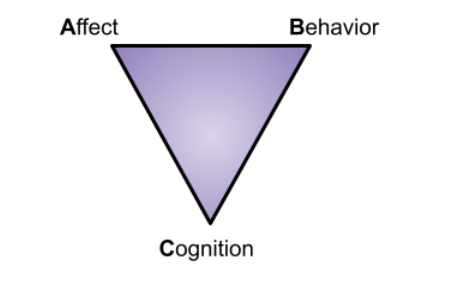
Cognitive Behavioral Therapy (CBT)
First Line, Gold Standard Treatment
Though there are many effective therapy treatments to date for a range of issues, CBT comes out as the most researched, most helpful for the widest range of problems, and can be highly personalized.
This triangle reflects no particular order or prioritization.
- A = Affect, or feelings and emotions
- B = Behavior, or actions
- C= Cognition, or thoughts and beliefs
CBT capitalizes on how each of these three domains have strong relationships to each other. The heart of the theory and practice is based on the knowledge that changing one or more of these domains leads to changes in the other. Another way of looking at it is that the more a person lines up their feelings, thoughts, and behaviors with reality, the more they achieve well-being, and many problems can be alleviated.
Exposure Therapy (ET and ERP)

Relevant Videos
Curated to get you started.
What is Exposure Therapy and How Do You Do It?
Exposure therapy can sound intense. What is it? How is it done? Why is it so effective? Justin K Hughes, MA, LPC explains simply an extremely effective FIRST LINE and “GOLD STANDARD” treatment for anxiety disorders and more.
The 4 Types of Exposure Therapy
Exploring the 4 Types of Exposure Therapy- In Vivo, Imaginal, Interoceptive, and Virtual Reality- Justin offers punctual clarity to the approach of how fears that are being treated can be accessed, whether situationally, in one’s thoughts/imagination, through sensations, or a combination.
"Security is mostly a superstition. It does not exist in nature, nor do the children of men as a whole experience it. Avoiding danger is no safer in the long run than outright exposure."
Specially Curated Resources
These are handpicked, referenced in ACTUAL therapy sessions.
(Sorry, I cannot accommodate outside requests to add to resources.)This page may contain affiliate links. This means that some links on this site will produce a small commission from affiliate sites. Read more

Distinguishing Information-Seeking and Reassurance Seeking
This helpful chart is an educational guide separating info-seeking from reassurance.
View >
Overcoming Unacceptable Thoughts (Houston OCD)
Check out this presentation by several notable clinicians on “overcoming unacceptable thoughts.”
View >
Relapse Prevention in OCD (Shala Nicely)
“As you go into recovery from OCD, it’s good to keep in mind that relapse
prevention is a process, and living how we want to live requires some
maintenance….”

“May” or “May Not” Exposure Scripting (Shala Nicely)
“…MOMN statements, which are a type of exposure scripting, can be used with any type of OCD content…because OCD is not about the content!”
View >
Exposure and Desensitization (U of Mich)
“We spoke about sensitization in the section “Anxiety Fuel.” Now we’ll talk
about desensitization, which means we work to make our anxiety alarm less
sensitive, so it doesn’t go off as often or as loudly.”


Facing Your Fears: Exposure (Anxiety BC)
“An important step in managing anxiety involves facing feared situations, places or
objects. It is normal to want to avoid the things you fear. However, avoidance prevents
you from learning that the things you fear are not as dangerous as you think.”

Key Research Articles on Imaginal Exposure (Science Direct)
“Imaginal exposure refers to patients intentionally confronting specific memories….in their imaginations either by verbally describing … or by writing a description…”
View >
Stopping the Noise In Your Head (Dr. Reid Wilson)
“Dr. Reid Wilson proposes a groundbreaking, paradoxical approach to overcoming anxiety, worry, OCD, panic, and phobias by moving away from comfort, confidence, and security and willingly moving toward uncertainty, distress and discomfort.”
View >From My Blog
Related posts from my blog
Finally! A Roadmap for Christians with OCD (Big Reveal)
Dear friends, It’s really happening. For the last six years, I’ve been trying to “practice what I preach”—but it wasn’t easy. While writing The Christian’s Guide to Overcoming OCD, I faced some of the same “what-ifs” my clients do. What if I misrepresent God? What if I’m not good enough? What if this fails? I […]
Read More >
OCD is Not a Faith Problem: Why the Church Must Listen to the Muffled Cries of the Tormented
Chris and Olivia are two people with Obsessive-Compulsive Disorder (OCD), yet their stories reveal a tale of two churches, highlighting sometimes inconsistent and poor treatment of those OCD within the church. ⛪ This past month, I started a Substack with the article, OCD Is Not A Faith Problem: Why the Church Must Listen to the Muffled […]
Read More >
OCD, Uncertainty, and Faith: Finding Peace in God’s Promises When Your Thoughts Attack
For Christians with OCD, uncertainty can commonly center on spiritual and religious doubts. Learn how focusing on the unchanging promises of God can be the bedrock of your healing, even when you can’t untangle your thoughts. The following guest article is by Meghan Newkirk. Join my free newsletter to be the first to receive articles […]
Read More >
Help! What steps do I take if I have OCD?
If you suffer from Obsessive Compulsive Disorder (OCD), or even if you only suspect it, getting help quickly can make all the difference. The average time from the onset of symptoms to treatment is 11 to 17 years. That’s a terrible length of time to let the suffering grow, often out of control. OCD is […]
Read More >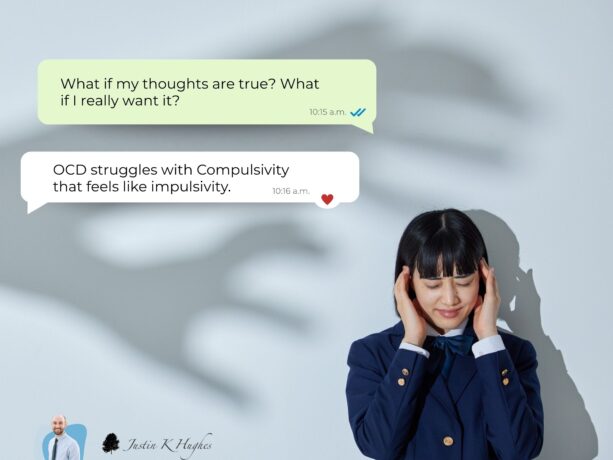
OCD is Compulsivity that feels like Impulsivity
What if I want the bad thing to happen? What if I don’t really love them? What if I need to figure this out? What if me not being distressed means I’m missing something? The Hope in the Suffering If you ever suffer with questions like this, you are not alone. However, it is undoubtedly […]
Read More >
Praying through Doubt
In an article titled ” How to Pray for Faith in the Midst of Doubt,” Erika Allen provides a poignant resource on trusting God despite doubt. She starts with one of my favorite passages in Scripture, Mark 9:21-24: And Jesus asked his father, “How long has this been happening to him?” And he said, “From […]
Read More >Stay in the know with regular articles to your inbox